


Schools are increasingly important spaces for supporting vaccine literacy, but educators, students, and families are navigating a complex landscape shaped by misinformation, access barriers, and varying levels of confidence in health decision-making. Supporting vaccine literacy in this context requires more than information. It calls for approaches that are collaborative, responsive, and grounded in the realities of school communities.
Supporting vaccine literacy in schools is an ongoing priority for Ophea’s work across Ontario. In 2022, with funding support from Merck and the Public Health Agency of Canada (PHAC), Ophea developed the Vaccination Talks Toolkit, an online resource designed to help educators bring health literacy, media literacy, and inquiry-based learning into classroom conversations about vaccines and healthy living.
From Resources to Practice
Building on this work, Ophea has been working with Parry Sound High School, the Near North District School Board, and the North Bay Parry Sound District Health Unit to explore how schools can strengthen understanding, trust, and engagement around vaccines as part of broader student health and well-being. This collaboration uses Canada’s Comprehensive School Health approach, a framework that focuses on a whole-school approach for student health and learning.
Through the Healthy Schools Recognition Program, schools are supported to apply the Comprehensive School Health approach in their own context, organizing initiatives and activities that strengthen student well-being and learning and support collaborative, long-term change.
In 2024, Parry Sound High School formed a School Health Team, identified local barriers to vaccine uptake, and began developing Action Plans to address them in meaningful, school-specific ways. Some of the barriers identified were:
- Religious and family beliefs
- Limited discussion on vaccinations and decision-making power
- Limited school-based vaccine education
- Physical barriers to vaccination access
- The spread of misinformation online
During the 2025-2026 school year, Ophea continued to collaborate with Parry Sound High School to refine, implement, and evaluate their Action Plans. This phase of the collaboration focused on strengthening and sustaining the school’s approach to vaccine literacy through ongoing action and community engagement.
Key priorities included increasing the number of students accessing school-based vaccine clinics, strengthening knowledge and confidence among students, families, and staff, and expanding opportunities for meaningful engagement around vaccine-related health information. The work also continued to centre collaboration with Indigenous community members to support culturally grounded programming.
Partnerships, Student Voice, and Community Connections
The Near North District School Board and Parry Sound High School have been advancing their work on vaccine literacy through strong, intentional collaboration. A key foundation of their approach has been the ongoing partnership between the school board and the North Bay Parry Sound District Health Unit, which has allowed for shared awareness of community needs and board-wide dissemination of research-informed resources. Parry Sound High School also works closely with the health unit to support students and families, providing trusted vaccine information, accessible resources, and open lines of communication.
Connections with local First Nations communities, including a nearby healing centre, have also been beneficial, creating opportunities for culturally responsive programming, meaningful representation, and supports grounded in community knowledge and lived experience. At the same time, working with neighbouring schools and community partners has helped to extend the reach of these efforts, reinforcing a coordinated, community-wide approach to health and well-being.
Collaboration is present within the school community as well. Parry Sound High School included a lead from the student senate on their School Health Team this year, ensuring student voice is actively embedded in planning, decision-making, and implementation. Staff from the Indigenous Education Department also joined the team, supporting the development of activities that reflect and honour the school’s strong Indigenous culture and priorities.
The Nobel Self Care Summit
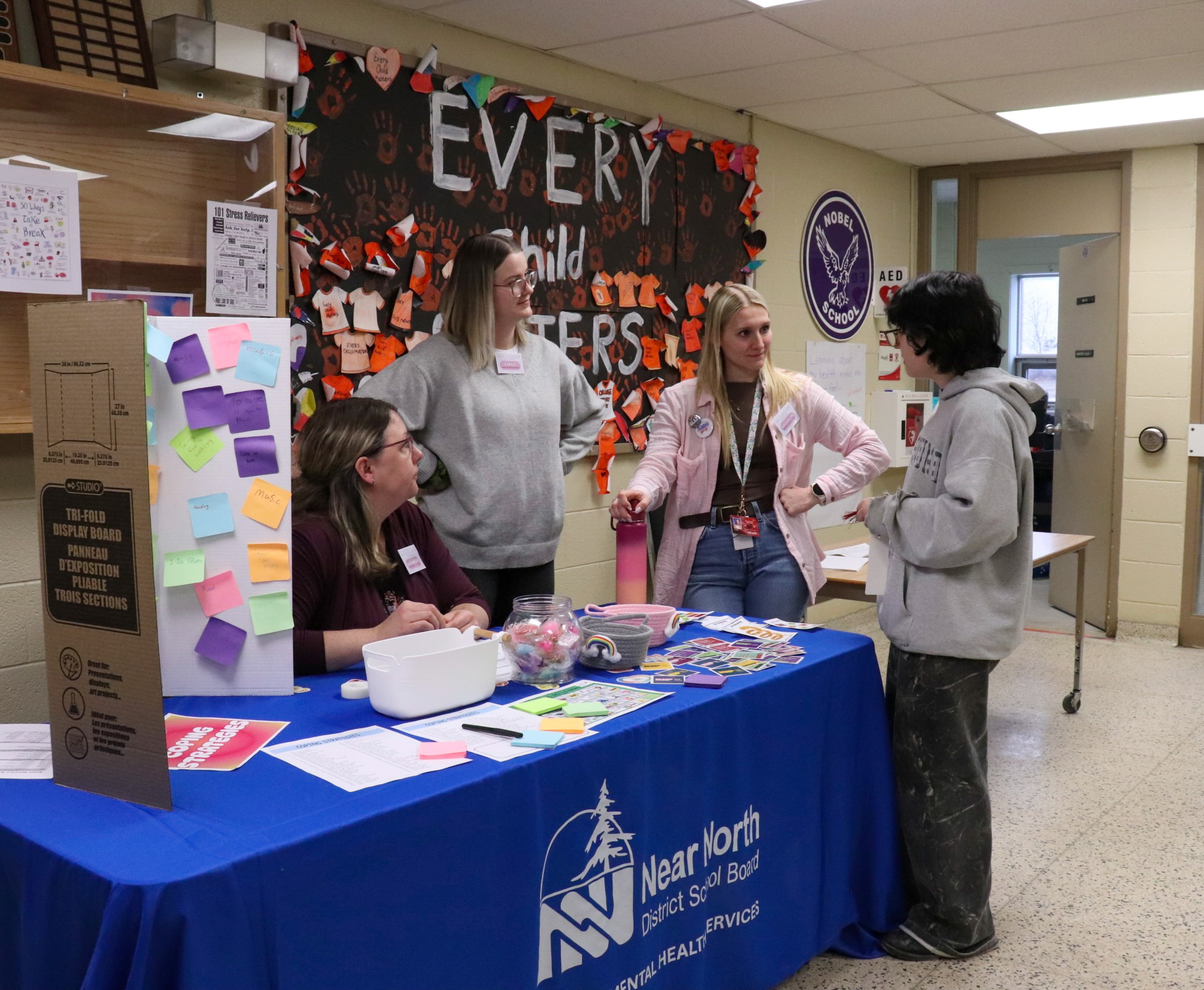
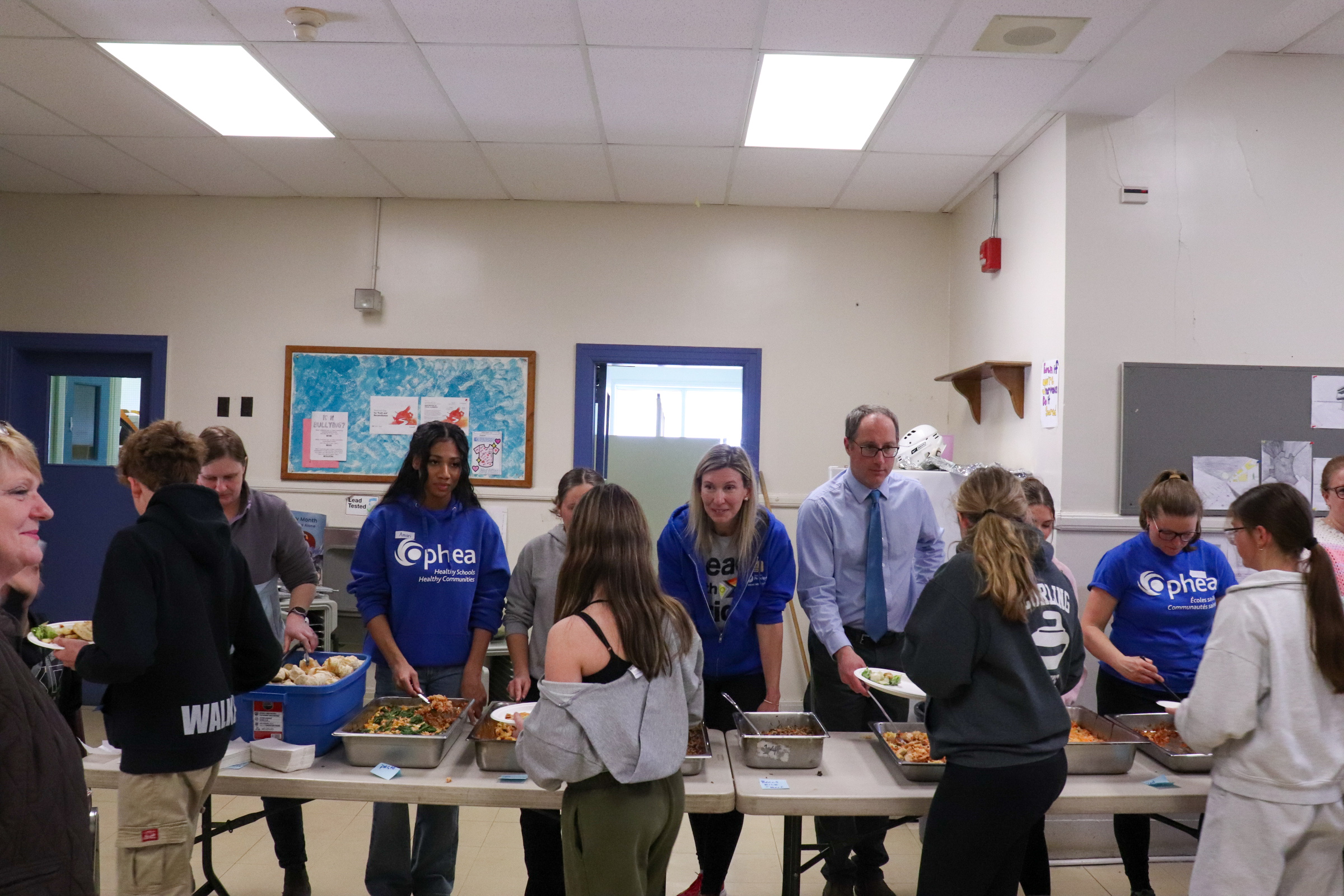
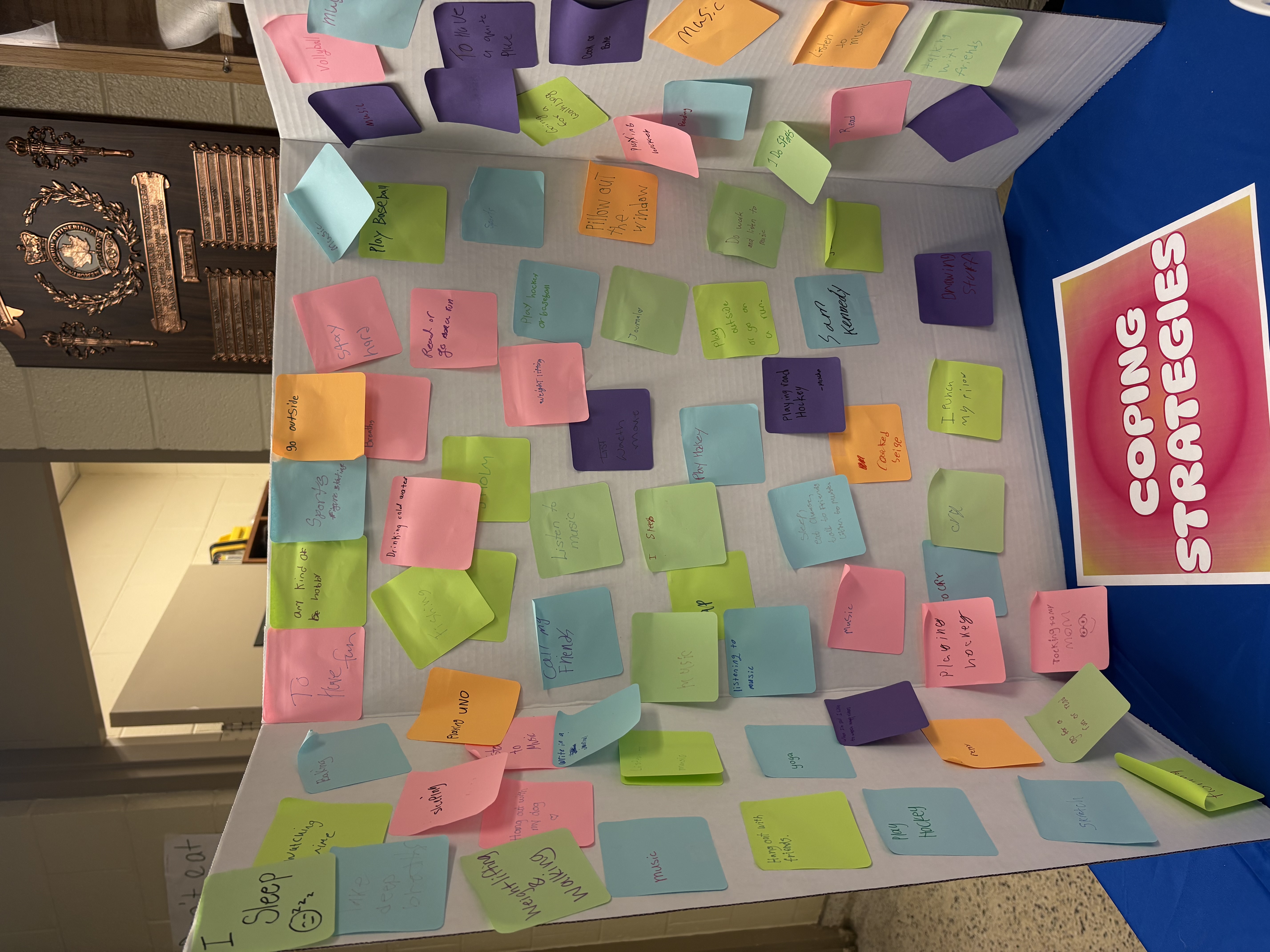
One example of this expanded, collaborative approach was the Nobel Self Care Summit, Ophea supported this event, which brought together students, staff, and community partners for a full-day, multi-stream health learning experience. Approximately 200 students rotated through six sessions covering a range of topics: physical activity and mindfulness, stress management and coping, vaccine literacy, cybersafety and cyberbullying, consent and healthy relationships, and vaping awareness.
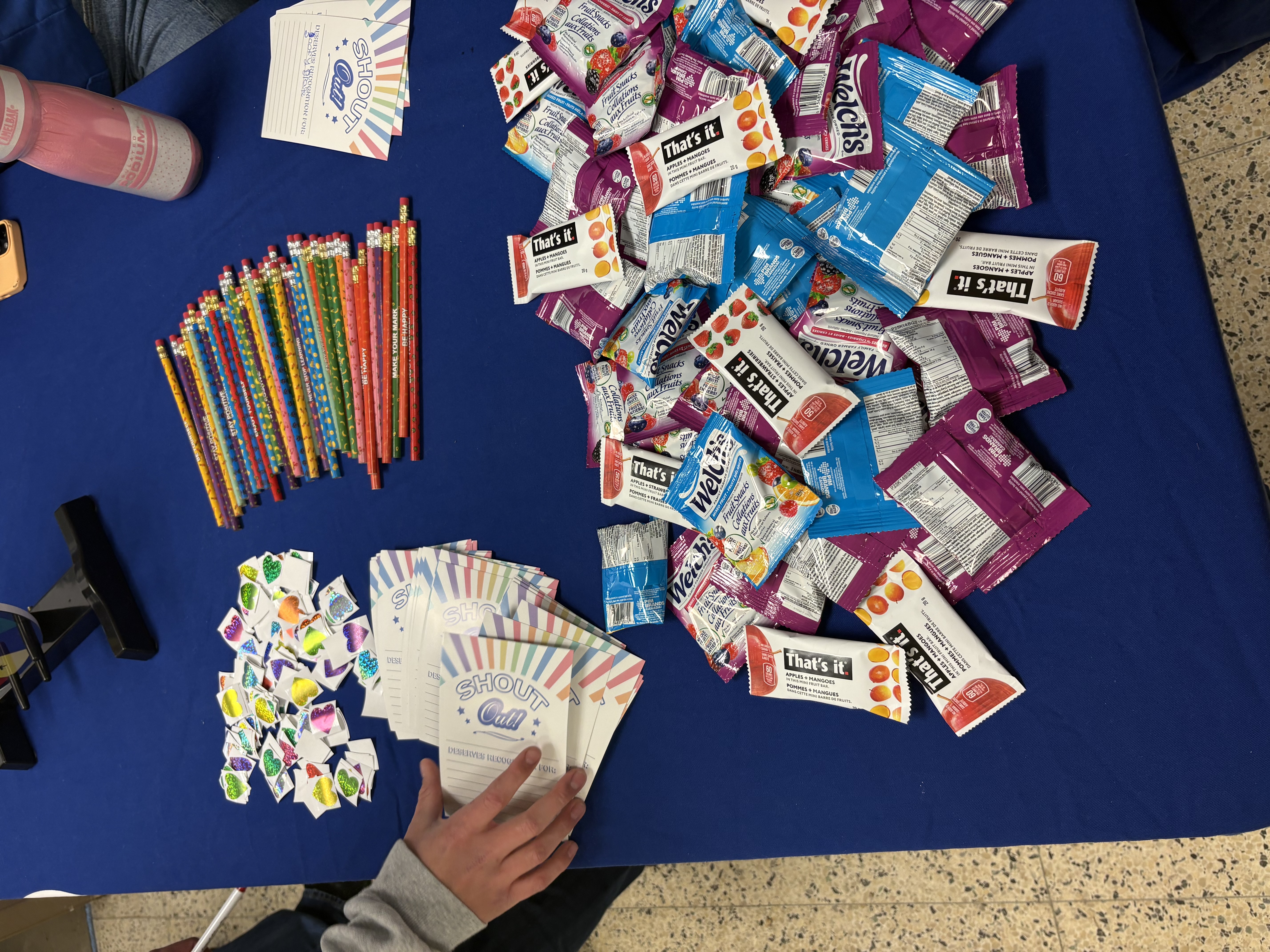
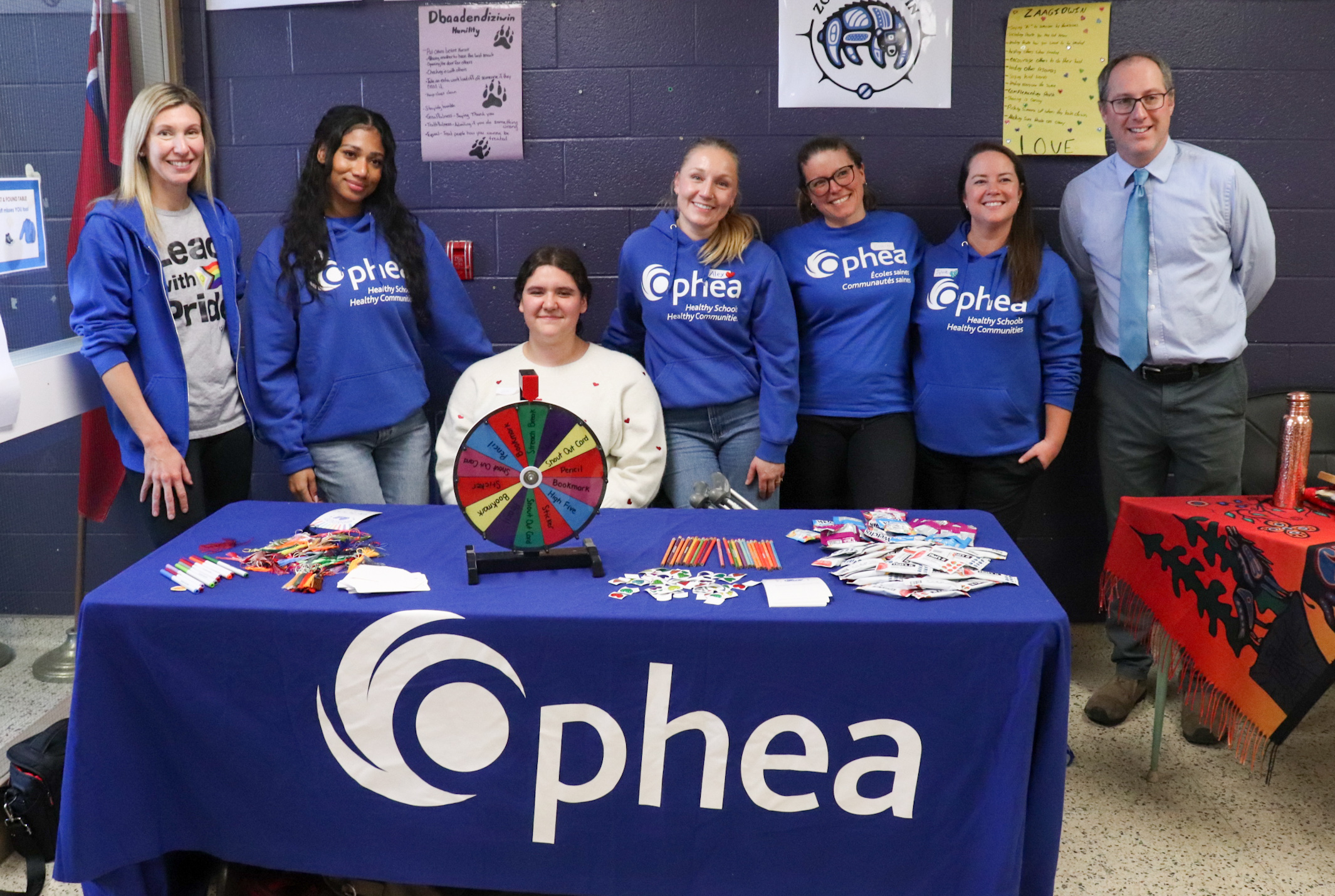
The event also featured an exhibitor hall with community partners, including a local Knowledge Carrier from Wasauksing First Nation, the North Bay Parry Sound District Health Unit, the Near North District School Board Mental Health Team, and Ophea.
Following the event, student exit cards were used to gather feedback on learning and engagement. Most students reported neutral to positive feelings about learning about vaccine literacy, sharing their key learnings about vaccines, including:
- Vaccines are important
- They prevent illnesses
- Vaccines are researched, studied, and tested before they are given to people
- They are good for you and good for your community
Taken together, this work illustrates how vaccine literacy is strengthened when it is embedded within relationships and delivered as part of learning about overall health. Through sustained collaboration between schools, public health, and community partners, and by centering student voice and honouring Indigenous teachings, Parry Sound High School’s approach shows how schools can create spaces where students feel informed, supported, and included in conversations about their well-being.
As Ophea’s work with this school community continues to evolve, it offers important learnings about how the Comprehensive School Health framework can be used to move from one-time initiatives toward coordinated, community-driven action that supports vaccine literacy. These insights offer a practical foundation for other schools and boards looking to strengthen vaccine literacy as part of a broader commitment to student health and well-being.
Related Resources